



Updated Zillow Housing Forecast July 2026
We’re halfway through 2026 so let’s take a look at what’s happening with the national and local housing market.
I use a service called Resiclub to track housing markets.
Zillow’s National Housing Forecast Predicts Negative Growth
Zillow just revised their updated 12-month forecast, projecting that U.S. home prices—as measured by the Zillow Home Value Index—will shift -0.2% between May 2026 and May 2027.
That’s negative growth.

That’s a small downward revision from its 12-month national forecast published in April (+0.1%) and its 12-month national forecast published in March (+0.5%).
U.S. home prices, as measured by the Zillow Home Value Index, are currently up +0.8% year-over-year. Zillow’s latest 12-month outlook (-0.1%) expects national home prices to remain near that subdued pace. For so long as national home price growth remains below U.S. wage growth (currently up +3.5%), underlying fundamentals should continue to improve as the Pandemic Housing Boom’s housing demand and overheating gets smoothed out. If that trend continues—and mortgage rates don’t spike—national housing affordability should also slowly continue to improve.
To give you some perspective – here’s the average shift in home prices going back to 2001:

And here’s the wage growth chart:

Colorado Front Range
When we dig deeper into the Colorado Front Range, Zillow predicts the following:

Denver -2.7%
Boulder -2.5%
Fort Collins -1.6%
Greeley -2.4%
Colorado Springs -2.5%
Pueblo -2.7%
Cheyenne -1.8%
Keep those underwriting pencils sharpened, your current market valuations conservative and adjust down your expected ARV on those fix and flip projects.
It looks like another slow year for real estate investors in the Colorado Front Range.
USA Biggest Winners and Losers
Back to the national map.
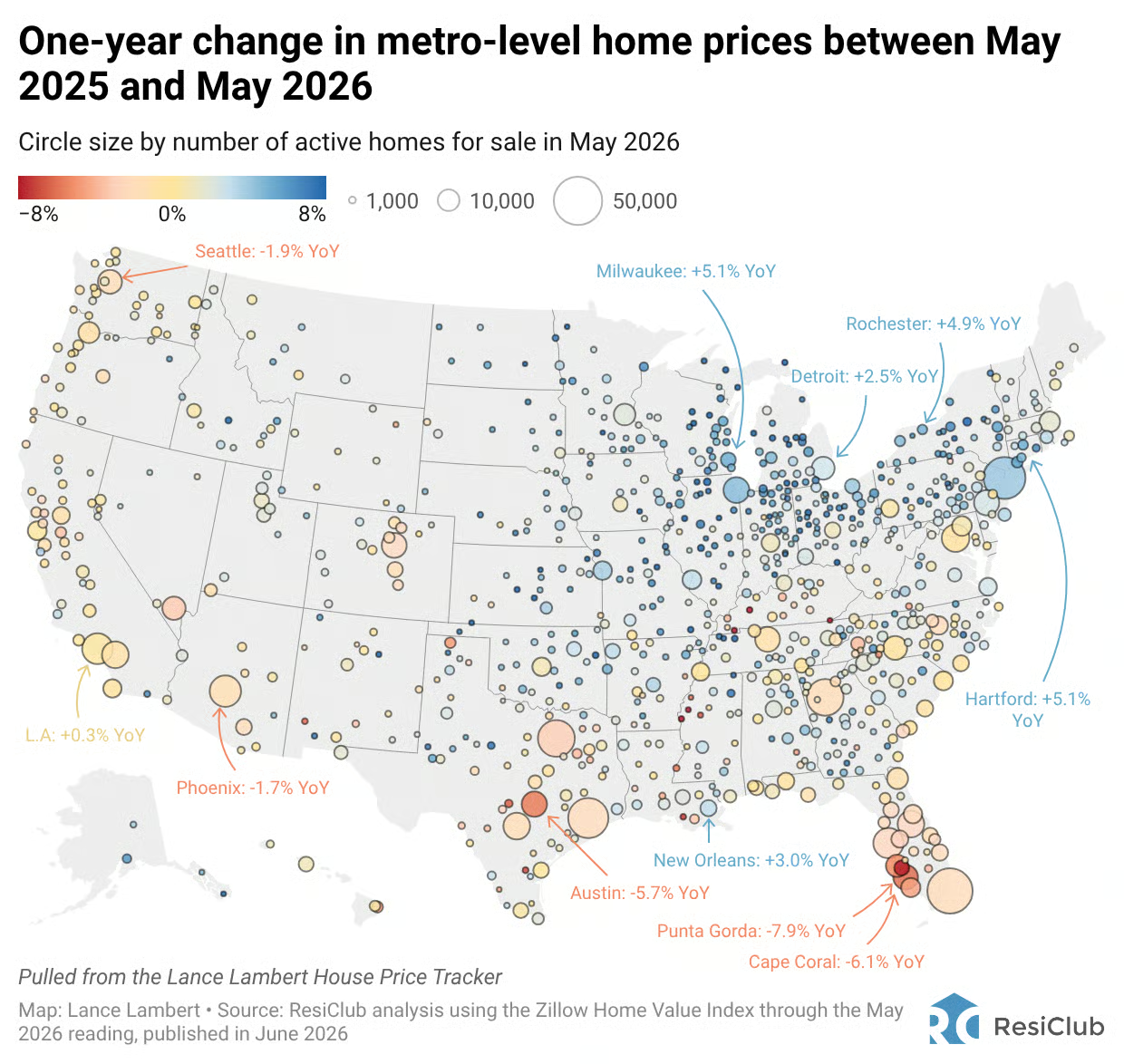
Among the 300 largest U.S. metro area housing markets, Zillow forecast the biggest home price increase between May 2026 and May 2027 to occur in these 15 metros:
- Rockford, IL → 4.3%
- Syracuse, NY → 4.2%
- Utica, NY → 3.7%
- Atlantic City, NJ → 3.6%
- Rochester, NY → 3.4%
- Binghamton, NY → 3.3%
- Youngstown, OH → 3.0%
- Erie, PA → 2.9%
- Pottsville, PA → 2.9%
- Knoxville, TN → 2.8%
- Norwich, CT → 2.8%
- Saginaw, MI → 2.7%
- Janesville, WI → 2.7%
- Vineland, NJ → 2.7%
- Morristown, TN → 2.7%
The North-East continues to show strong growth.
Among the 300 largest U.S. metro area housing markets, Zillow forecast the biggest home price decline between May 2026 and May 2027 to occur in these 15 metros:
- Houma, LA → -6.6%
- Austin, TX → -6.1%
- Lake Charles, LA → -5.3%
- New Orleans, LA → -4.8%
- Alexandria, LA → -4.1%
- Chico, CA → -4.0%
- Punta Gorda, FL → -3.7%
- Lafayette, LA → -3.6%
- Vallejo, CA → -3.5%
- Santa Rosa, CA → -3.2%
- Beaumont, TX → -3.2%
- San Francisco, CA → -2.9%
- San Antonio, TX → -2.9%
- Stockton, CA → -2.9%
- Texarkana, TX → -2.9
Declining values across CA, TX, FL and the South. Denver sits just outside the top 15 markets at -2.7%.
Join the Reiville community and learn how Colorado investors are adapting to our new housing market.